



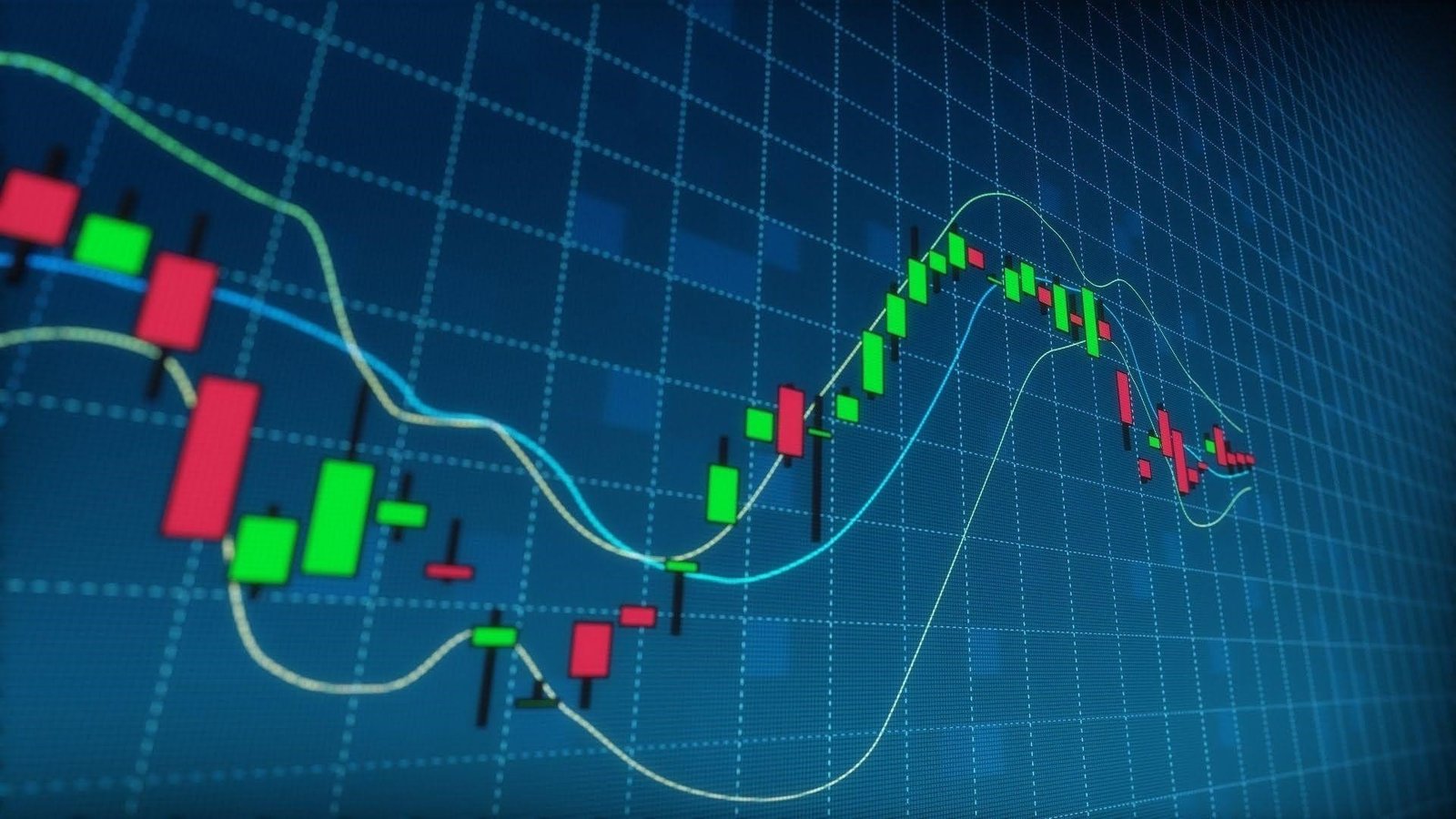
The Forex market is a living, breathing ecosystem—one that never sleeps and constantly evolves. As traders enter 2025, success no longer depends solely on intuition or experience. Instead, it’s about mastering the right indicators—the tools that reveal where the market is heading before it actually moves. In this era of automation, AI-driven analytics, and data transparency, knowing which Forex indicators truly matter can be the difference between profits and missed opportunities.
In this detailed guide, we’ll explore the top Forex indicators you can’t afford to ignore in 2025, how they work, and why they’re essential for traders aiming to stay ahead of global market trends.
1. The Evolution of Forex Indicators: Why 2025 Is Different
Before diving into the indicators themselves, it’s crucial to understand the context. The Forex landscape in 2025 is vastly different from what it was even five years ago.
- Algorithmic trading now dominates over 70% of total daily volume.
- AI-powered bots use deep learning to interpret price action in real-time.
- High-frequency trading (HFT) reacts to micro-signals faster than human traders ever could.
These changes mean that traditional indicators like simple moving averages or MACD still matter—but only when used with modernized strategies and real-time adaptability. Traders who rely solely on old-school methods often find themselves outpaced by data-driven competitors.
The indicators that shine in 2025 are hybrid tools—those that blend price action, momentum, and predictive analytics to detect early trend shifts.
2. Relative Strength Index (RSI) 2.0 — The Modern Momentum Detector
The RSI has long been a trader’s favorite, but in 2025, it’s evolved. The updated version—often called RSI 2.0 or Adaptive RSI—uses dynamic smoothing and AI-calibrated thresholds to adjust sensitivity based on market volatility.
Why it matters:
Traditional RSI simply signals when a currency pair is “overbought” or “oversold.” RSI 2.0, on the other hand, adjusts these zones automatically during volatile sessions, helping traders avoid false signals.
Pro Tip: Combine Adaptive RSI with volume-based indicators to confirm the strength behind each momentum move.
Best for: Swing traders and momentum-based day traders who thrive on short- to medium-term price movements.
3. Adaptive Moving Averages (AMA) — The Smarter Trend Follower
The Moving Average has always been a backbone of trend analysis. However, 2025’s version—Adaptive Moving Average (AMA)—is built for the era of rapid trend reversals and unpredictable volatility.
How it works:
Unlike traditional MAs that lag behind price, AMA dynamically adjusts its smoothing factor based on the volatility ratio. When the market is stable, it smooths out noise; when it’s volatile, it reacts faster to price changes.
Why it’s a must-watch:
In a world where trend reversals can happen in seconds, AMA gives traders a more accurate reflection of live market sentiment.
Pro Tip: Use AMA alongside an ATR (Average True Range) indicator to spot both trend direction and volatility levels.
Best for: Trend followers and position traders looking for cleaner entries and exits.
4. Volume Profile — The Hidden Map of Market Intent
In 2025, volume analysis has become a crucial component of professional Forex trading. The Volume Profile indicator visualizes traded volume at specific price levels rather than across time.
Why it’s powerful:
It reveals where major institutional players (banks, hedge funds, and algorithms) are accumulating or distributing positions. This gives traders insight into price levels that truly matter, not just where prices have moved.
Example:
If the EUR/USD shows a volume spike at 1.0850, it’s a signal that big money is active there—potentially forming a support or resistance zone.
Pro Tip: Combine Volume Profile with candlestick patterns for confirmation before entering a trade.
Best for: Advanced traders who focus on supply-demand imbalances and institutional footprints.
5. Bollinger Bands (Smart Edition) — Dynamic Volatility in Action
Bollinger Bands have stood the test of time, but the 2025 “smart” versions come with adaptive bandwidth algorithms that self-tune to real-time volatility changes.
How they work:
Traditional Bollinger Bands expand and contract based on a simple standard deviation. The smart versions integrate machine learning models that account for macroeconomic data and high-impact news releases, minimizing false breakouts.
Why traders love it:
Smart Bollinger Bands are now part of AI-powered trading dashboards, alerting traders of probable volatility bursts before they occur.
Pro Tip: Use Smart Bollinger Bands with RSI 2.0 for a dual-layer volatility and momentum confirmation strategy.
Best for: Scalpers and volatility traders.
6. Ichimoku Cloud — Still the King of All-in-One Indicators
Even with modern AI tools, the Ichimoku Kinko Hyo remains one of the most complete systems for identifying market direction, momentum, and strength in a single view.
In 2025, many trading platforms now offer AI-enhanced Ichimoku systems that automatically recalibrate cloud thickness and lagging lines based on macroeconomic conditions.
Key features:
- Identifies trend direction and strength
- Offers dynamic support/resistance zones
- Provides clear buy/sell confirmation signals
Why it’s relevant:
Its comprehensive nature allows traders to see the full market story at a glance, making it ideal for analyzing currency pairs with unpredictable volatility like GBP/JPY or USD/TRY.
Pro Tip: When price breaks above the cloud while the Chikou Span confirms, it often signals the start of a powerful new trend.
Best for: Intermediate and advanced traders looking for a complete market perspective.
7. The Sentiment Index — The Pulse of Trader Psychology
In the digital trading world of 2025, market sentiment analysis has become indispensable. Tools now aggregate real-time positioning data from retail and institutional sources to create a Sentiment Index.
How it works:
It shows the percentage of traders who are long versus short on specific pairs. When sentiment becomes extremely one-sided, it often foreshadows a trend reversal.
Why it’s critical:
With more transparency from broker APIs and crowd-sourced trading platforms, sentiment data now reflects actual open positions, giving traders a psychological edge.
Pro Tip: Use Sentiment Index in conjunction with trend indicators. If sentiment shows 90% of traders are long but price stalls, a short squeeze could be near.
Best for: Contrarian traders and swing traders.
8. AI Predictive Indicator (API) — The Future in Real-Time
The AI Predictive Indicator (API) is one of the most exciting developments of 2025. Powered by machine learning models, it analyzes hundreds of variables—from price history and volume to macroeconomic reports—to forecast short-term price probabilities.
How it works:
API learns from historical and live data to create dynamic prediction models for each currency pair. The output is a “probability score” showing the likelihood of upward or downward movement over the next few hours or days.
Why it’s revolutionary:
Instead of merely reacting to price, API provides proactive insights, allowing traders to position themselves ahead of the market.
Pro Tip: Combine API with classic indicators (like moving averages) for a hybrid approach—AI for prediction, traditional tools for confirmation.
Best for: Quant traders and data-driven professionals.
9. Average True Range (ATR) — The Volatility Compass
In 2025, volatility remains the heartbeat of the Forex market. The ATR indicator continues to be one of the simplest yet most powerful tools for measuring it.
Why it’s essential:
ATR helps determine stop-loss distances, position sizing, and volatility-adjusted targets, ensuring trades align with real market rhythm.
Modern enhancement:
AI-enabled ATR versions now account for global economic calendar events, automatically widening or tightening ranges around high-impact news.
Pro Tip: Always adjust trade size based on ATR readings—higher ATR means smaller lot sizes for the same risk.
Best for: Risk managers and swing traders.
10. Multi-Timeframe Confluence (MTC) — The Hidden Strength of Alignment
Traders in 2025 no longer rely on a single chart. The Multi-Timeframe Confluence indicator allows users to see alignment between various timeframes—such as 1H, 4H, and daily—in a single interface.
Why it’s a game-changer:
It eliminates guesswork by showing where short-term and long-term trends converge, increasing the probability of successful trades.
Pro Tip: When the 4-hour, daily, and weekly trends align in the same direction, that’s your green light for high-confidence entries.
Best for: Position traders and multi-timeframe analysts.
11. Fibonacci Heatmap — The Geometry of Market Cycles
The Fibonacci Heatmap is a 2025 innovation that integrates classic retracement levels with AI heat intensity visualization. It highlights which Fibonacci zones are statistically more likely to trigger reversals.
Why it stands out:
Instead of manually plotting lines, the Heatmap automatically adjusts based on price clusters and volume concentration, giving a visual cue for potential turning points.
Pro Tip: Use the Fibonacci Heatmap with Volume Profile to identify convergence zones—these areas often signal powerful reversals.
Best for: Technical analysts and reversal traders.
12. The Fusion Approach: Blending Indicators for Maximum Impact
No single indicator can guarantee accuracy. The most successful Forex traders in 2025 rely on indicator fusion strategies—blending different types to create balanced systems.
Here’s an example of a 2025 fusion setup:
- AMA for trend direction
- Adaptive RSI for momentum confirmation
- Volume Profile for institutional insight
- ATR for volatility management
This combination ensures that every trade decision is supported by trend, momentum, volume, and volatility data—a complete market picture.
13. The Human Factor: Indicators Are Tools, Not Oracles
Despite all technological advancements, it’s vital to remember that indicators don’t predict the future—they interpret probabilities. The human trader’s role remains irreplaceable in 2025.
Indicators provide signals, but context, discipline, and emotion control are what turn those signals into profits. Traders who blindly follow indicators without understanding market psychology often end up losing, even with the best tools.
The best approach? Treat indicators as advisors, not dictators.
Conclusion: 2025 Belongs to the Data-Driven Trader
The Forex market of 2025 rewards those who evolve. The best traders are not those with the most indicators, but those who understand how and when to use them.
By mastering modern tools like RSI 2.0, Adaptive Moving Averages, Smart Bollinger Bands, and AI Predictive Indicators, traders can navigate volatile conditions with confidence and clarity.
The key takeaway?
In 2025, trend followers will survive—but trend breakers will dominate. Learn to spot shifts before they happen, blend traditional wisdom with modern tech, and you’ll be trading not behind the trend—but ahead of it.